Saturday, August 25, 2012
Of Bible-Believing Christians, Baseball Bats, and Transgender People -- Never Forget -- August 25, 2010
Dispatch from Coudersport:
Originally posted by Joe Wilson, August, 31, 2010:
Diane Gramley sat peacefully behind Robert Wagner in the Coudersport Public Library as the retired physician shared his views on transgender individuals with the assembled audience. “I'm gonna put a ball bat in my car,” he said, “and if I ever see a guy [Wagner refuses to use proper pronouns] coming out of a bathroom that my granddaughter's in, I'm gonna use the ball bat on him.” Moments later he added: “In the good old days, before 'she-males' existed, they just called such people perverts.”
Gramley is no stranger to such ideas. As President of the Pennsylvania Chapter of the American Family Association, a 'traditional family values' organization based in Mississippi, she spends much of her time planting similar seeds of suspicion about the dangers posed by “men who think they are women,” her disparaging term for transgender females. She also crusades relentlessly against what she and the AFA call the “homosexual agenda” and the type of legal protections that her and Dr. Wagner's threatening rhetoric suggests are needed for lesbian, gay, bisexual and transgender (LGBT) people.
Gramley was in Coudersport, a small town of 2,600 residents in the sparsely populated north-central part of the state known as the Pennsylvania Wilds, as a special guest of Dr. Wagner for what he titled “A Bible Believing Christian's Response to OUT IN THE SILENCE,” my documentary film about the quest for inclusion, fairness and equality for LGBT people in the small town where I was born and raised, Oil City, PA, just a two-hour drive from Coudersport.
Gramley, who also happens to call the Oil City area home, plays a central role in OUT IN THE SILENCE as a result of the firestorm of controversy she helped to ignite in opposition to the publication of my same-sex marriage announcement in the local paper. It was that controversy that compelled my partner, Dean Hamer, and I to go back to my hometown with our cameras to document what life is like there for LGBT people, and to show hopeful and inspiring stories about the growing movement for equality.
The film was produced in partnership with Penn State Public Broadcasting, received support from the Sundance Institute, premiered at the Human Rights Watch International Film Festival, screened in Tribeca Cinemas Doc Series, and has been broadcast on PBS stations around the country. We're now using it as an educational tool in a grassroots campaign to help raise LGBT visibility and to bring people together in small towns like Oil City and Coudersport to begin building bridges across the gaps that have divided families, friends, and entire communities on these issues for far too long.
As part of this campaign, OUT IN THE SILENCE had screened just a month earlier for a standing-room-only crowd in the Coudersport Public Library despite vehement opposition from Dr. Wagner and the efforts of the local Tea Party and a small group of fundamentalist preachers to shut the event down and have the library 'de-funded' for making its space available for such a program.
Wagner's “Bible Believing Response,” he told the crowd of approximately 60 local church people, “was intended to expose the filmmakers’ real agenda and to question the directors’ assertion that the community should tolerate alternative lifestyles.”
During the two hour program, Wagner asked special guest Gramley a few questions about her experiences as a minor subject of the film, but he used her more as a prop, seated silently behind him, providing an odd sort of legitimacy as he put forth offensive theories and mischaracterizations about LGBT people, including that “AIDS is the gay plague” and “gays can't have families.”
Dean and I were in the library for the presentation. We made the six-hour drive to Coudersport from our home in Washington, DC because I wanted to bear witness to this event, to experience for myself, if only for a few hours, what it feels like to be so close to such willful ignorance and brazen cruelty.
As I sat there, listening to 'amens,' snickering laughter, and even a roar of approval from the people around me when asked if they agree with the AFA assertions that there “should be legal sanctions against homosexual behavior” and “homosexuals should be disqualified from public office,” I felt a sadness unlike any I have known before. A sadness for those who fall prey to such bigoted and hostile bombast, who carry the feelings these things stir into their homes and family relationships, and for the communities that suffer the sometimes-violent consequences of such mean-spirited divisiveness.
But as I looked at Gramley, unmoved next to Wagner, condoning the ugliness without a word of protest, I thought of all the courageous people who have attended OUT IN THE SILENCE Campaign events over the past many months in far flung places, including there in Coudersport, who refuse to be silent anymore, who are working for change in their communities against great odds, and I was inspired all over again.
It is in their spirit that we will continue our campaign to speak out in the silence and to help build the movement for fairness and equality in small towns and rural communities across America.
I hope you'll join us! Learn more at OutintheSilence.com


After Gay Son’s Suicide, Mother Finds Blame in Herself and in Her Church
from The New York Times (8/25/12):
Ridgewood, NJ -- When Tyler Clementi told his parents he was gay, two days before he left for Rutgers University in the fall of 2010, he said he had known since middle school.
 “So he did have a side that he didn’t open up to us, obviously,” his mother, Jane Clementi, said, sitting in her kitchen here nearly two years later. “That was one of the things that hurt me the most, that he was hiding something so much. Because I thought we had a pretty open relationship.”
In her surprise, she had peppered him with questions: “How do you know? Who are you going to talk to? Who are you going to tell?” Tyler told a friend that the conversation had not gone well. His father had been “very accepting,” he wrote in a text message. “Mom has basically completely rejected me.”
Three weeks later, he jumped off the George Washington Bridge after discovering that his roommate had used a webcam to spy on him having sex and that he had sent out Twitter messages encouraging others to watch.
An international spotlight turned the episode into a cautionary coming-out story, of a young man struggling with his sexuality and the damage inflicted by bullying. His roommate, Dharun Ravi, was tried and convicted of intimidation and invasion of privacy; he served a short jail sentence. But the trial never directly addressed the question at the heart of the story — what prompted a promising college freshman to kill himself?
It is that question that lingers over the household here on a tidy street in this prosperous suburb.
The Clementis continue to blame the bad luck of a roommate lottery and the cowardice of students who failed to step up and say that the spying was wrong.
But their son’s suicide has also forced changes, and new honesty, upon them. They have left the church that made Ms. Clementi so resistant to her son’s declaration. Their middle son, James, acknowledged what the family had long suspected and said that he, too, was gay. The family is devoting itself to a foundation promoting acceptance with the hope of preventing the suicides of gay teenagers.
Most of all, Ms. Clementi has had to grapple with her own role in Tyler’s death.
“People talk about coming out of the closet — it’s parents coming out of the closet, too,” she said. “I wasn’t really ready for that.”
At the time Tyler sat down to tell his parents he was gay, she believed that homosexuality was a sin, as her evangelical church taught. She said she was not ready to tell friends, protecting her son — and herself — from what would surely be the harsh judgments of others.
“It did not change the fact that I loved my son,” she said. “I did need to think about how that would fit into my thoughts on homosexuality.”
Yet it did not occur to her that Tyler would think she did not accept him. She had long talked with him about how his brother James was gay — though at the time James had not said he was. “Tyler knew we weren’t going to reject him or stop paying for college for him or not let him come home, because James had done all those things and we had a good relationship,” she said.
Tyler’s father, Joe Clementi, characterized the last month in his son’s life as a “rough spot.” But Ms. Clementi said she believed he was “confident, comfortable” in his decision. He left for Rutgers telling his parents about plans to attend events for gay students. He reported having gone to New York with new friends to see plays; his parents took this to mean he was adjusting well.
During a phone call one afternoon he sounded different. “A little sad,” Ms. Clementi said. “I thought maybe it was adjusting to being away. I told him how much I missed him, he got a little teary and told me he’d missed me, too. I thought he’d been away too much.”
That evening, Joe Clementi was awakened by a call from the Port Authority police, saying they had Tyler’s wallet and phone, that he’d been seen — then not seen — on the bridge.
In the months after Tyler’s death, some of Ms. Clementi’s friends confided that they, too, had gay children. She blames religion for the shame surrounding it — in the conversation about coming out, Tyler told his mother he did not think he could be Christian and gay.
“I think some people think that sexual orientation can be changed or prayed over,” she said now, in her kitchen. “But I know sexual orientation is not up for negotiation. I don’t think my children need to be changed. I think that what needed changing is attitudes, or myself, or maybe some other people I know.”
She decided she could no longer attend her church, because doing so would suggest she supported its teachings against homosexuality. And she took strength from reading the Bible as she reconsidered her views.
“At this point I think Jesus is more about reconciliation and love,” she said. “He spoke more about divorce than homosexuality, but you can be divorced and join a church more than you can be gay and join churches.”
What has troubled her most is the thought that Tyler believed she had rejected him.
Joe Clementi argues that his son was speaking with classic teenage exaggeration to a friend, that the remark was taken out of context by people who did not know the family, or the facts. “Just to be clear: Tyler had two parents, and I didn’t have any problem with it,” he said. “He had support.”
But Ms. Clementi can’t dismiss it that easily. “Obviously he felt that way, he needed to tell his friend that.”
Sitting in the courtroom every day during Mr. Ravi’s trial this winter, the Clementis often looked brittle, and rarely spoke. But here in their home, next to the elementary school that all three of their boys attended, they spoke openly. They have also been speaking to school and corporate groups about their experience. And though she supports the prosecution’s appeal of the 30-day sentence Mr. Ravi received on the ground that that it was too short, Ms. Clementi said, “It won’t change my life one way or another.”
It is a relief to have come out of the closet, she said. “It is not something I would have done on my own.”
She thinks often about her last phone call with Tyler, hours before he went to the bridge.
“I was sitting right over there,” she said, pointing to a corner of the kitchen. They had what seemed like an innocuous discussion about whether his parents should take Tyler’s bike to Rutgers for him. It was expensive and beloved, and he had not wanted it stolen.
“He got very teary and wistful — ‘Oh, my bike, I forgot about my bike,’ ” she recalled. “After the fact I think about it in different terms, but at the time, I didn’t. He said, ‘No, keep it at home.’ ”
She cannot recall how they said goodbye.
“It was probably the way we said goodbye all the time,” she said. “ ‘Goodbye, I love you,’ ‘I love you more.’ That was the way we usually ended it. I’m sure that’s how we ended it that time, too.”
Ridgewood, NJ -- When Tyler Clementi told his parents he was gay, two days before he left for Rutgers University in the fall of 2010, he said he had known since middle school.

In her surprise, she had peppered him with questions: “How do you know? Who are you going to talk to? Who are you going to tell?” Tyler told a friend that the conversation had not gone well. His father had been “very accepting,” he wrote in a text message. “Mom has basically completely rejected me.”
Three weeks later, he jumped off the George Washington Bridge after discovering that his roommate had used a webcam to spy on him having sex and that he had sent out Twitter messages encouraging others to watch.
An international spotlight turned the episode into a cautionary coming-out story, of a young man struggling with his sexuality and the damage inflicted by bullying. His roommate, Dharun Ravi, was tried and convicted of intimidation and invasion of privacy; he served a short jail sentence. But the trial never directly addressed the question at the heart of the story — what prompted a promising college freshman to kill himself?
It is that question that lingers over the household here on a tidy street in this prosperous suburb.
The Clementis continue to blame the bad luck of a roommate lottery and the cowardice of students who failed to step up and say that the spying was wrong.
But their son’s suicide has also forced changes, and new honesty, upon them. They have left the church that made Ms. Clementi so resistant to her son’s declaration. Their middle son, James, acknowledged what the family had long suspected and said that he, too, was gay. The family is devoting itself to a foundation promoting acceptance with the hope of preventing the suicides of gay teenagers.
Most of all, Ms. Clementi has had to grapple with her own role in Tyler’s death.
“People talk about coming out of the closet — it’s parents coming out of the closet, too,” she said. “I wasn’t really ready for that.”
At the time Tyler sat down to tell his parents he was gay, she believed that homosexuality was a sin, as her evangelical church taught. She said she was not ready to tell friends, protecting her son — and herself — from what would surely be the harsh judgments of others.
“It did not change the fact that I loved my son,” she said. “I did need to think about how that would fit into my thoughts on homosexuality.”
Yet it did not occur to her that Tyler would think she did not accept him. She had long talked with him about how his brother James was gay — though at the time James had not said he was. “Tyler knew we weren’t going to reject him or stop paying for college for him or not let him come home, because James had done all those things and we had a good relationship,” she said.
Tyler’s father, Joe Clementi, characterized the last month in his son’s life as a “rough spot.” But Ms. Clementi said she believed he was “confident, comfortable” in his decision. He left for Rutgers telling his parents about plans to attend events for gay students. He reported having gone to New York with new friends to see plays; his parents took this to mean he was adjusting well.
During a phone call one afternoon he sounded different. “A little sad,” Ms. Clementi said. “I thought maybe it was adjusting to being away. I told him how much I missed him, he got a little teary and told me he’d missed me, too. I thought he’d been away too much.”
That evening, Joe Clementi was awakened by a call from the Port Authority police, saying they had Tyler’s wallet and phone, that he’d been seen — then not seen — on the bridge.
In the months after Tyler’s death, some of Ms. Clementi’s friends confided that they, too, had gay children. She blames religion for the shame surrounding it — in the conversation about coming out, Tyler told his mother he did not think he could be Christian and gay.
“I think some people think that sexual orientation can be changed or prayed over,” she said now, in her kitchen. “But I know sexual orientation is not up for negotiation. I don’t think my children need to be changed. I think that what needed changing is attitudes, or myself, or maybe some other people I know.”
She decided she could no longer attend her church, because doing so would suggest she supported its teachings against homosexuality. And she took strength from reading the Bible as she reconsidered her views.
“At this point I think Jesus is more about reconciliation and love,” she said. “He spoke more about divorce than homosexuality, but you can be divorced and join a church more than you can be gay and join churches.”
What has troubled her most is the thought that Tyler believed she had rejected him.
Joe Clementi argues that his son was speaking with classic teenage exaggeration to a friend, that the remark was taken out of context by people who did not know the family, or the facts. “Just to be clear: Tyler had two parents, and I didn’t have any problem with it,” he said. “He had support.”
But Ms. Clementi can’t dismiss it that easily. “Obviously he felt that way, he needed to tell his friend that.”
Sitting in the courtroom every day during Mr. Ravi’s trial this winter, the Clementis often looked brittle, and rarely spoke. But here in their home, next to the elementary school that all three of their boys attended, they spoke openly. They have also been speaking to school and corporate groups about their experience. And though she supports the prosecution’s appeal of the 30-day sentence Mr. Ravi received on the ground that that it was too short, Ms. Clementi said, “It won’t change my life one way or another.”
It is a relief to have come out of the closet, she said. “It is not something I would have done on my own.”
She thinks often about her last phone call with Tyler, hours before he went to the bridge.
“I was sitting right over there,” she said, pointing to a corner of the kitchen. They had what seemed like an innocuous discussion about whether his parents should take Tyler’s bike to Rutgers for him. It was expensive and beloved, and he had not wanted it stolen.
“He got very teary and wistful — ‘Oh, my bike, I forgot about my bike,’ ” she recalled. “After the fact I think about it in different terms, but at the time, I didn’t. He said, ‘No, keep it at home.’ ”
She cannot recall how they said goodbye.
“It was probably the way we said goodbye all the time,” she said. “ ‘Goodbye, I love you,’ ‘I love you more.’ That was the way we usually ended it. I’m sure that’s how we ended it that time, too.”
Friday, August 24, 2012

"Christian Patriot Arrested for Obscenity & Public Lewdness" -- Is It Just A Matter of Time Till We See Such A Headline About Diane Gramley And/Or Other Venango County Hate Group Hypocrites?
Rev. Grant Storms, Critic of Southern Decadence,
Convicted of Obscenity for Public Masturbation
from The Times-Picayune (8/22/12):
The Rev. Grant Storms, the former "Christian patriot" pastor whose marches against homosexuality at New Orleans' Southern Decadence festival briefly put him in the national spotlight, was convicted of obscenity Wednesday, for exposing himself while masturbating at Lafreniere Park last year. In his confession, he described public masturbation as "a thrill," but authorities debunked suspicions that he was a pedophile.

Storms, 55, who lives in Metairie, declined to comment after the conviction. Judge Ross LaDart of the 24th Judicial District Court, who presided over the daylong trial because Storms waived a jury, did not even break to deliberate. He promptly found Storms guilty of the single count of obscenity. He sentenced Storms to three years of probation, citing no evidence of a criminal history.
LaDart also ordered Storms to be evaluated, apparently psychologically. The judge noted that in Storms' confession, he admitted that Feb. 25, 2011, the day he was arrested, was the third time that week that he masturbated in Lafreniere Park.
"Lafreniere Park is a public place," LaDart said in announcing the verdict. "Lafreniere Park is a place that was chosen by this defendant to engage in a history of masturbation."
Storms declined to testify. His attorneys, Brett Emmanuel and Donald Cashio, did not overtly deny their client masturbated in the park but argued he never exposed his penis. The exposure was a necessary element of the obscenity charge.
In his confession, Storms told Jefferson Parish Sheriff's Office Sgt. Kevin Balser he had taken a break from his grass cutting business to sip a beer in the park, where he said he became "horny." He said he put his hands into his underwear, but he never exposed himself.
"Why do you go to the park and do this, as far as masturbating?" Balser asked Storms hours after the arrest.
"I don't know," Storms responded. "I guess a thrill."
"So it's a thrill-slash-fantasy for you?" Balser asked.
"Yes," Storms said.
The incident immediately raised speculation that Storms was a pedophile, because he masturbated with children nearby. Assistant District Attorney Seth Shute shot those allegations down outright Wednesday, saying in opening statements that detectives found no evidence of child pornography on his computer or cell phone, and there was "never a shred of evidence (showing) that Mr. Storms was masturbating to children."
Apparently attempting to explain to police why he exposed himself, Storms confessed that as a grass cutter, he carried a "pee bottle" with him, and on the day of his arrest, he sipped a beer in his van and then had to urinate. He did it in the bottle, instead of walking to a park restroom. However, Detective Donald Zanotelli testified he searched Storms' van and found no bottles with urine in them.
Following his arrest, Storms provided an impromptu press conference for local television reporters, accusing the Sheriff's Office of suggesting he was a pedophile and calling detectives "maniacal" and "coercive." But he admitted to have watched pornography that day and to putting his hands in his pants. "I apologize deeply for my inappropriate, sinful actions," he said tearfully, describing himself as "disoriented and confused."
The press conference came back to haunt Storms, as Shute used a recording of it as evidence Wednesday. "It begs the question: What is he apologizing for?" Shute said.
The exposure appeared to be incidental. Shute's key witness was Maria Soto, an Hispanic nanny who at times needed help from an interpreter to testify. She said she was taking three children to Lafreniere for a picnic when she parked in a shady spot next to Storms' minivan. She got out of her car and happened to see him doing the deed as he reclined in the driver's seat, wearing a hat that partially covered his face.
She said he saw her and immediately covered his penis with his other hand. Emmanuel, Storms' attorney, challenged her claim of seeing the penis, asking her at one point if she had ever seen a man masturbate. She became angry. "That's embarrassing for you to ask me that," Soto told him.
Storms received national media attention in 2003, for his leading his small congregation through the French Quarter during the annual gay festival, Southern Decadence, admonishing homosexuals and calling the city of New Orleans a "prostitute" for allowing the event that generates tourism dollars. A Bourbon Street merchants association at one point went to court to get a restraining order barring Storms and his followers from using bullhorns. National news media converged on New Orleans in 2003 to cover his protests.
###
Below left, Diane Gramley, President of the Venango County-based hate group known as the American Family Association of Pennsylvania, holding a "Stop Public Nudity & Street Orgies" sign on the steps of the San Francisco City Hall in Sept. 2008.

Thursday, August 23, 2012
The Right's Un-American Rejection of Science & Thinking
Visit NBCNews.com for breaking news, world news, and news about the economy
Tuesday, August 21, 2012
The True Values of the American Family Association: "Lie and Demean Women"
Bryan Fischer: Akin Is Right — ‘Genuine’ Rape Makes It ‘Impossible’ To Conceive
by David Badash for The New Civil Rights Movement:
American Family Association today came out in support of comments Congressman Todd Akin made over the weekend, that the bodies of women victims of “legitimate rape” — as he called it Sunday — can automagically prevent getting pregnant all by themselves. Fischer, the public face of the certified anti-gay hate group, American Family Association, said:
“When you have a real, genuine rape, a case of forcible rape, a case of assault rape, where a woman has been violated against her will, through the use of physical force,” Fischer describes, adding “there’s a very delicate and complex mix of hormones that take place that are released in a woman’s body and if that gets interfered with it may make it impossible for her or difficult in that particular circumstance to conceive a child.”
Of course, the chances of what Fischer is stating are dramatically low. Just ask the 32,000 women who get pregnant each year through rape.
Fischer is defending a lie. It’s an old one, one meant to demean women, one meant to protect men and one meant to make women out to be “responsible” for being raped (the old, “she wanted it.”)
And it’s disgusting.
Is there any wonder why the American Family Association is on the Southern Poverty Law Center’s list of hate groups? It’s not the hate, it’s the lies.
Saturday, August 11, 2012
True, All American-Style, Family Values: U.S. Army Welcomes First Openly Gay, Married, General
This story represents a kind of family values that the Venango County-based hate group, American Family Association of Pennsylvania, could never comprehend.
from the Los Angeles Times:

During a promotion ceremony at Arlington National Cemetery, a proud wife placed a star insignia on her spouse's uniformed shoulder — the official mark of an Army brigadier general.
With that simple gesture, Brig. Gen. Tammy Smith became the country's first openly gay general.
The promotion of Smith, the highest-ranking gay or lesbian to acknowledge his or her sexual orientation while serving, comes less than a year after the repeal of “don't ask, don't tell,” the policy that banned gays and lesbians from serving openly in the military.
Since the reversal last September, the relationship between the government and the armed forces has shifted to include more outreach to LGBT service members.
Defense Secretary Leon E. Panetta posted a YouTube video thanking gay service members and praising the ban’s repeal. In June, the Pentagon hosted a Gay Pride Month event. And in July, members of the military wore their uniforms during a San Diego gay pride parade, the first time the Defense Department had allowed such a practice.
On Friday, more than 70 people clustered inside an auditorium at Arlington's Women in Military Service for America Memorial.
Smith, then a colonel, strode in with her commanding officer at the stroke of 4 p.m. The audience sang the national anthem and a young boy led the Pledge of Allegiance.
The announcer presented Smith’s father. Then came an introduction: “Col. Smith's partner, Miss Tracey Hepner.”
The audience burst into applause.
“This part is a little fuzzy for me, because I have to confess, I got choked up,” said Sue Fulton, an Army veteran and friend of the couple who attended the event. “People have been working toward this moment for decades.”
Hepner and Smith got married last year in Washington, D.C. They dated for nine before that. Before don’t ask, don’t tell was repealed, they could not present themselves as a couple at military functions.
Smith is not active in gay and lesbian rights, but her wife is, Fulton said. As the Pentagon conducted a review of the policy, officials couldn’t speak to gay service members about their experiences without outing them. So they asked their partners and spouses instead. Hepner was one.
The ceremony was like any other for an officer achieving a new rank, Fulton told the Los Angeles Times on Saturday. Supervisors focused on Smith's 26-year career, which has included assignments in Afghanistan and Costa Rica. Lt. Gen. Jack C. Stulz echoed that, describing Smith as a “quiet professional” who could handle tough jobs competently and quickly.
Hepner and Smith could not be reached for comment. In an interview with Stars and Stripes, Smith said she understood the social significance of her promotion, even though she viewed that as secondary.
“All of those facts are irrelevant,” Smith was quoted as saying. “I don’t think I need to be focused on that. What is relevant is upholding Army values and the responsibility this carries.”
During promotion ceremonies, or pinnings, the honoree chooses who will attach new insignias to the Army uniform’s epaulets.
Smith's father pinned one shoulder. Hepner pinned the other.
Then, her father and Hepner unfurled Smith's new general flag — red with one white star — that will fly wherever she is working.
In a speech after the pinning, Smith spoke of “standing on the shoulders of giants” during her life, including her parents and her high school mentors.
She didn’t have to mention her wife. The audience knew they were there together.
from the Los Angeles Times:

During a promotion ceremony at Arlington National Cemetery, a proud wife placed a star insignia on her spouse's uniformed shoulder — the official mark of an Army brigadier general.
With that simple gesture, Brig. Gen. Tammy Smith became the country's first openly gay general.
The promotion of Smith, the highest-ranking gay or lesbian to acknowledge his or her sexual orientation while serving, comes less than a year after the repeal of “don't ask, don't tell,” the policy that banned gays and lesbians from serving openly in the military.
Since the reversal last September, the relationship between the government and the armed forces has shifted to include more outreach to LGBT service members.
Defense Secretary Leon E. Panetta posted a YouTube video thanking gay service members and praising the ban’s repeal. In June, the Pentagon hosted a Gay Pride Month event. And in July, members of the military wore their uniforms during a San Diego gay pride parade, the first time the Defense Department had allowed such a practice.
On Friday, more than 70 people clustered inside an auditorium at Arlington's Women in Military Service for America Memorial.
Smith, then a colonel, strode in with her commanding officer at the stroke of 4 p.m. The audience sang the national anthem and a young boy led the Pledge of Allegiance.
The announcer presented Smith’s father. Then came an introduction: “Col. Smith's partner, Miss Tracey Hepner.”
The audience burst into applause.
“This part is a little fuzzy for me, because I have to confess, I got choked up,” said Sue Fulton, an Army veteran and friend of the couple who attended the event. “People have been working toward this moment for decades.”
Hepner and Smith got married last year in Washington, D.C. They dated for nine before that. Before don’t ask, don’t tell was repealed, they could not present themselves as a couple at military functions.
Smith is not active in gay and lesbian rights, but her wife is, Fulton said. As the Pentagon conducted a review of the policy, officials couldn’t speak to gay service members about their experiences without outing them. So they asked their partners and spouses instead. Hepner was one.
The ceremony was like any other for an officer achieving a new rank, Fulton told the Los Angeles Times on Saturday. Supervisors focused on Smith's 26-year career, which has included assignments in Afghanistan and Costa Rica. Lt. Gen. Jack C. Stulz echoed that, describing Smith as a “quiet professional” who could handle tough jobs competently and quickly.
Hepner and Smith could not be reached for comment. In an interview with Stars and Stripes, Smith said she understood the social significance of her promotion, even though she viewed that as secondary.
“All of those facts are irrelevant,” Smith was quoted as saying. “I don’t think I need to be focused on that. What is relevant is upholding Army values and the responsibility this carries.”
During promotion ceremonies, or pinnings, the honoree chooses who will attach new insignias to the Army uniform’s epaulets.
Smith's father pinned one shoulder. Hepner pinned the other.
Then, her father and Hepner unfurled Smith's new general flag — red with one white star — that will fly wherever she is working.
In a speech after the pinning, Smith spoke of “standing on the shoulders of giants” during her life, including her parents and her high school mentors.
She didn’t have to mention her wife. The audience knew they were there together.
Values, Traditional Family-Style: "Commander Ousted in Air Force Sex Scandal"
from the Los Angeles Times:
HOUSTON -- A sex scandal at Lackland Air Force Base in Texas has led to the dismissal of the top commander overseeing basic training for every new American airman, officials said Friday.
 Col. Glenn Palmer was commander of basic training for the 737th Training Group at the base near San Antonio, where more than a dozen military instructors in the last year have been charged with or investigated on suspicion of sexually assaulting recruits.
On Friday, officials confirmed reports by the Associated Press that Palmer had been relieved of duty by Col. Eric Axelbank, commander of the 37th training wing at Lackland.
“Col. Palmer was relieved because Col. Eric Axelbank lost confidence in his ability to maintain a safe and secure training environment for our newest airmen,” Collen McGee, spokeswoman for the 37th Training Wing, told the Los Angeles Times. Axelbank decided that, for the 737th group, “a new leader is required to meet the current needs,” she said.
But, McGee added, “Col. Palmer did not create the environment that resulted in the misconduct.”
No replacement had been announced, she said.
Palmer isn’t the first Lackland commander removed since the scandal erupted last year.
In June, Axelbank relieved Col. Mike Paquette, commander of the 331st Training Squadron, for what a military attorney described as a loss of confidence in his leadership.
Axelbank is also expected to change command next month, a move Air Force officials said predated the sex scandal, according to the AP.
Lackland has about 475 military training instructors, the Air Force equivalent of drill sergeants. So far, six instructors have been charged with offenses ranging from rape to adultery, and investigators believe that more than three dozen female trainees have been victimized.
Last month, Staff Sgt. Luis Walker, the first Lackland instructor investigated last year in connection with the scandal, was sentenced to 20 years in prison after being convicted of raping a female recruit and sexually assaulting several others.
HOUSTON -- A sex scandal at Lackland Air Force Base in Texas has led to the dismissal of the top commander overseeing basic training for every new American airman, officials said Friday.

On Friday, officials confirmed reports by the Associated Press that Palmer had been relieved of duty by Col. Eric Axelbank, commander of the 37th training wing at Lackland.
“Col. Palmer was relieved because Col. Eric Axelbank lost confidence in his ability to maintain a safe and secure training environment for our newest airmen,” Collen McGee, spokeswoman for the 37th Training Wing, told the Los Angeles Times. Axelbank decided that, for the 737th group, “a new leader is required to meet the current needs,” she said.
But, McGee added, “Col. Palmer did not create the environment that resulted in the misconduct.”
No replacement had been announced, she said.
Palmer isn’t the first Lackland commander removed since the scandal erupted last year.
In June, Axelbank relieved Col. Mike Paquette, commander of the 331st Training Squadron, for what a military attorney described as a loss of confidence in his leadership.
Axelbank is also expected to change command next month, a move Air Force officials said predated the sex scandal, according to the AP.
Lackland has about 475 military training instructors, the Air Force equivalent of drill sergeants. So far, six instructors have been charged with offenses ranging from rape to adultery, and investigators believe that more than three dozen female trainees have been victimized.
Last month, Staff Sgt. Luis Walker, the first Lackland instructor investigated last year in connection with the scandal, was sentenced to 20 years in prison after being convicted of raping a female recruit and sexually assaulting several others.
Thursday, August 9, 2012
Hater, Heal Thyself
An apt message for the Venango County-based hate group known as the American Family Association of Pennsylvania ...
from Will O'Bryan at Metro Weekly:

Bryon Widner is the subject of a recent documentary, Erasing Hate. Widner, once a racist skinhead, tattooed himself to make his disposition clear. The documentary follows his hours of painful procedures to remove that ink, reflecting his transition away from all that anger. Painful for Widner, but a feel-good story, nonetheless.
Of course, he's gotten death threats from white supremacists still trapped in their own cages that hate built.
Symon Hill was also in need of redemption. He found it by walking 160 miles from Brighton, England, to London last year. He calls that trip ''a pilgrimage of repentance for my former homophobic attitudes and behavior.'' Another feel-good story, right?
Not for some, probably. At least one person is too angry to forgive Hill his trespasses. On the Guardian.co.uk site, a post about Hill was answered with, ''This guy should fucking crawl the distance for his forgiveness. I forgive him nothing.''
In some people there is this expression. Maybe it's hate. Maybe it's anger. Maybe jealousy or fear or arrogance. While it's evidenced in some, we are certainly all capable of embodying this negative pain. That's what I thought of as I watched the lines of people – people who no doubt believe they were doing the right thing, making a righteous stand – line-up to support Chick-fil-A.
Whatever they may have thought, they weren't standing up for freedom of speech. They were standing up to oppress gays and lesbians. They were standing up to support donations being made, as tracked by Equality Matters, to the Family Research Council and Focus on the Family. They might have thought otherwise, but just what did they think had everybody so upset? If you're going to take an action against a community – even if you'd prefer to believe it's in support of free speech and in opposition to no one – you know what you're doing. And I forgive you.
I really wish, however, you could forgive yourself. Forgive yourself for whatever shortcoming, whatever sin that has made you so strident. If you're anti-gay because your kid is gay and you blame yourself, stop; you had nothing to do with your kid's sexual orientation. If you simply think two dudes getting it on is gross, forgive yourself. That's okay. We don't take it any more personally than you do when your kids get grossed out by seeing you kiss your spouse. If you think you're not being dogmatic enough in your religious beliefs, that God will smite you for loosening your grip, just please stop. Forgive yourself. If most people's gods are famous for anything, it's forgiveness. At least, as an observer, it seems to me I've heard plenty more about love and forgiveness than about righteous damnation.
There's no need to give up your beliefs to give up some of that anger. If you think God frowns on romantic love between people of the same sex, that's between you and God. If, however, you think marriage equality is the harbinger of societal downfall, lighten up. Consider that you're the Jewish parent of a straight girl engaged to a nice Mormon fellah, and she's going to convert. It may distress you, but it's not the end of the world. Let it go. To the guy demanding the former homophobe ''fucking crawl,'' take a breath. Mr. Hill didn't put a bomb in a gay bar. Just count to 10 and give him a small salute for trying to make things right.
Our lives are short. As everything moves forward, your hate will do little but hold you back. I'm not hoping you'll leave it behind for my sake. I'll be fine, either way. But I am hoping you'll do it for yourself.
At Some Point, That Fault You Find In Others Is Your Own
from Will O'Bryan at Metro Weekly:

Bryon Widner is the subject of a recent documentary, Erasing Hate. Widner, once a racist skinhead, tattooed himself to make his disposition clear. The documentary follows his hours of painful procedures to remove that ink, reflecting his transition away from all that anger. Painful for Widner, but a feel-good story, nonetheless.
Of course, he's gotten death threats from white supremacists still trapped in their own cages that hate built.
Symon Hill was also in need of redemption. He found it by walking 160 miles from Brighton, England, to London last year. He calls that trip ''a pilgrimage of repentance for my former homophobic attitudes and behavior.'' Another feel-good story, right?
Not for some, probably. At least one person is too angry to forgive Hill his trespasses. On the Guardian.co.uk site, a post about Hill was answered with, ''This guy should fucking crawl the distance for his forgiveness. I forgive him nothing.''
In some people there is this expression. Maybe it's hate. Maybe it's anger. Maybe jealousy or fear or arrogance. While it's evidenced in some, we are certainly all capable of embodying this negative pain. That's what I thought of as I watched the lines of people – people who no doubt believe they were doing the right thing, making a righteous stand – line-up to support Chick-fil-A.
Whatever they may have thought, they weren't standing up for freedom of speech. They were standing up to oppress gays and lesbians. They were standing up to support donations being made, as tracked by Equality Matters, to the Family Research Council and Focus on the Family. They might have thought otherwise, but just what did they think had everybody so upset? If you're going to take an action against a community – even if you'd prefer to believe it's in support of free speech and in opposition to no one – you know what you're doing. And I forgive you.
I really wish, however, you could forgive yourself. Forgive yourself for whatever shortcoming, whatever sin that has made you so strident. If you're anti-gay because your kid is gay and you blame yourself, stop; you had nothing to do with your kid's sexual orientation. If you simply think two dudes getting it on is gross, forgive yourself. That's okay. We don't take it any more personally than you do when your kids get grossed out by seeing you kiss your spouse. If you think you're not being dogmatic enough in your religious beliefs, that God will smite you for loosening your grip, just please stop. Forgive yourself. If most people's gods are famous for anything, it's forgiveness. At least, as an observer, it seems to me I've heard plenty more about love and forgiveness than about righteous damnation.
There's no need to give up your beliefs to give up some of that anger. If you think God frowns on romantic love between people of the same sex, that's between you and God. If, however, you think marriage equality is the harbinger of societal downfall, lighten up. Consider that you're the Jewish parent of a straight girl engaged to a nice Mormon fellah, and she's going to convert. It may distress you, but it's not the end of the world. Let it go. To the guy demanding the former homophobe ''fucking crawl,'' take a breath. Mr. Hill didn't put a bomb in a gay bar. Just count to 10 and give him a small salute for trying to make things right.
Our lives are short. As everything moves forward, your hate will do little but hold you back. I'm not hoping you'll leave it behind for my sake. I'll be fine, either way. But I am hoping you'll do it for yourself.
David Barton's Crusade: Faith & Values Based On Lies
The Most Influential Evangelist You've Never Heard Of
Listen to the story on National Public Radio:
David Barton, friend & ally of the Venango County-based hate group the American Family Association of Pennsylvania, says Americans have been misled about their history. And he aims to change that.
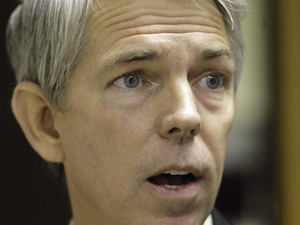
Barton has collected 100,000 documents from before 1812 — original or certified copies of letters, sermons, newspaper articles and official documents of the Founding Fathers. He says they prove that the Founding Fathers were deeply religious men who built America on Christian ideas — something you never learn in school.
For example, you've been taught the Constitution is a secular document. Not so, says Barton: The Constitution is laced with biblical quotations.
"You look at Article 3, Section 1, the treason clause," he told James Robison on Trinity Broadcast Network. "Direct quote out of the Bible. You look at Article 2, the quote on the president has to be a native born? That is Deuteronomy 17:15, verbatim. I mean, it drives the secularists nuts because the Bible's all over it! Now we as Christians don't tend to recognize that. We think it's a secular document; we've bought into their lies. It's not."
We looked up every citation Barton said was from the Bible, but not one of them checked out. Moreover, the Constitution as written in 1787 has no mention of God or religion except to prohibit a religious test for office. The First Amendment does address religion.
What about the idea that the founders did not want government entangled in religion? Wrong again, says Barton. On his tours of the U.S. Capitol, for example, he claims that Congress not only published the first American Bible in 1782, but it also intended the Bible to be used in public schools.
"And we're going to be told they don't want any kind of religion in education, they don't want voluntary prayer?" Barton asks his audience rhetorically? "No, it doesn't make sense."
But historians say Barton is flat-out wrong in his facts and conclusion. Congress never published or paid a dime for the 1782 Bible. It was printed and paid for by Philadelphia printer Robert Aitken. At Aitken's request, Congress agreed to have its chaplains check the Bible for accuracy. It was not, historians say, a government promotion of religion.
Vision For A Religion-Infused America
David Barton is not a historian. He has a bachelor's degree in Christian education from Oral Roberts University and runs a company called WallBuilders in Aledo, Texas. But his vision of a religion-infused America is wildly popular with churches, schools and the GOP, and that makes him a power. He was named one of Time magazine's most influential evangelicals. He was a long-time vice chairman for the Texas Republican Party. He says that he consults for the federal government and state school boards, that he testifies in court as an expert witness, that he gives a breathtaking 400 speeches a year.
Seeking his endorsement are politicians including Tea Party favorite Ted Cruz of Texas and Florida Sen. Marco Rubio, who's mentioned as a possible running mate for Mitt Romney. Newt Gingrich is a fan. So is Mike Huckabee.
"I almost wish that there would be like a simultaneous telecast," Huckabee said at a conference last year, "and all Americans will be forced, forced — at gunpoint, no less — to listen to every David Barton message. And I think our country will be better for it."

John Fea, chairman of the history department at evangelical Messiah College, doubts that. He says that Barton is peddling a distorted history that appeals to conservative believers.
"David Barton is offering an alternative vision of American history which places God, the providence of God, Christianity, at the center," he says.
Barton On Thomas Jefferson 'Lies'
Most recently, Barton has focused on Thomas Jefferson. His new book, The Jefferson Lies, made The New York Times best-seller list. Barton's aim is to bust the "myths" about Jefferson. One of them, he told Huckabee on Fox News, is that Jefferson was a religious skeptic. Barton argues that for the first 70 or so years of his life, Jefferson was a "conventional Christian," although he did express doubts in his final 15 years. As evidence of the third president's religiosity, Barton showed Huckabee an original document signed by Jefferson.
"Jefferson, unlike the other presidents, closes his documents: 'In the year of our Lord Christ,' " Barton said, not mentioning that this was a pre-printed form that was required by law.
"But we're always told he was such a secularist and didn't believe in religion," Huckabee protested.
"Exactly," Barton said. He goes on to say that Jefferson started church services at the Capitol, that he ordered the Marine Corps band to play at the services and that he funded a treaty to evangelize the Kaskaskia Indians — three claims that experts say are demonstrably false.
"That's why I say he's the least religious founder," Barton concluded, "but he's way out there further than most religious right today would be."
"Mr. Barton is presenting a Jefferson that modern-day evangelicals could love and identify with," says Warren Throckmorton, a professor at the evangelical Grove City College. "The problem with that is, it's not a whole Jefferson; it's not getting him right."
Throckmorton co-authored Getting Jefferson Right, a book detailing what he says are Barton's distortions. As to Jefferson's faith, Throckmorton says there is no dispute among historians: Jefferson questioned the most basic tenets of Christianity.
"He didn't see Jesus as God," Throckmorton says. He didn't believe that Jesus performed miracles, he dismissed the Trinity. Throckmorton notes that when Jefferson decided to write his own version of the Gospels, now called the Jefferson Bible, "he said he was taking 'diamonds as if from a dunghill.' So he picked out the Sermon on the Mount and the golden rule — those were the 'diamonds.' But the 'dunghill' was the virgin birth, the resurrection of Christ, the Great Commission."
There's another "lie" about Jefferson that Barton sets out to debunk. He says Jefferson — who owned nearly 200 slaves — was a civil rights visionary.
"Had his plans been followed, Virginia would've ended slavery really early on," Barton says. "They would have gone much more toward civil rights. He was not as advanced in his views of slavery as say, John Adams in New England, but he certainly was no racist in that sense."
Barton quotes Virginia law that he says prohibited Jefferson from freeing his slaves during his lifetime — but Barton omits the section of the law that says Virginians could free slaves. Confronted by this, Barton says that Jefferson could not afford to free his slaves.
Yearning For The Past?
The idea that Jefferson was a civil rights visionary appalls the Rev. Ray McMillian, pastor of Oasis Church in Cincinnati.
"Thomas Jefferson hated African-Americans," McMillian says. "He hated the color of our skin. He talked about how inferior we are, in both mind and body."
McMillian is president of Cincinnati Area Pastors, which is boycotting the publisher of Barton's book, Thomas Nelson Publishers. He says by "whitewashing" Jefferson — and all the other slaveholding founders, for that matter — Barton is rewriting history to make it palatable for Christians today.
"All in their hearts they're saying, 'If we could just go back there, America would be right,' " McMillian says. "Right for who?"
Not for blacks, not for women, not for Native Americans, he says — only for white men.
Besides, historians say, this golden age never existed.
"None of the founders were necessarily interested in promoting a specifically Christian nation," says Fea at Messiah College. "Many of the founders believed in something akin to separating church and state even though they didn't use those terms. And in fact, most of the people in America were not regular churchgoers. So what is that great culture that we're returning to?"
"I'm not trying to throw the nation back 200 years," Barton responds. "I don't want the technology to go backward, I love the health [care] stuff we got now. What I try to use is principles that are timeless." And surprisingly relevant. On The Daily Show last year, Barton told Jon Stewart that he's amazed that the founders' insights apply to today's problems.
"I got a call from three congressmen off the floor and they said, 'Hey! Anything in history about bailout and stimulus plans in Congress?'" Barton recalled. "It turns out in 1792 there was a big debate in Congress about bailout and stimulus plans."
Barton says the founders didn't like them. He says they had insights on other modern issues as well. They would oppose abortion because the first inalienable right is the right to life. They even opposed the theory of evolution.
"You go back to the Founding Fathers, as far as they're concerned, they already had the entire debate on creation-evolution," he said on Daystar Television Network. "And you get Thomas Paine, who's the least religious Founding Father saying, 'You've GOT to teach creation science in the classroom. Scientific method demands that.'"
Of course, that was years before Charles Darwin was born.
'A Corrective To Historians'
Still, Barton has many supporters, though few of them are historians. One is Mat Staver, dean of Liberty University's Law School.
"I think he's a corrective to historians," Staver says. "In fact, I would put him against any historian and would have no question who would win in a debate."
Barton says he has a policy of not debating anyone. He adds that he doesn't care if historians disagree with him: He believes his trove of documents proves his points — although historians have seen the same documents and draw different conclusions. Barton also believes his critics might be envious, since his books — and world view — sell so well.
"I don't know if it's jealousy or liberalism," he says. "I certainly know the guys who come after me have made it very clear usually in the introductions of their stuff that they disagree with me, and my religious faith, and my view on America."
Fea, who is an evangelical himself, says he believes Barton is a danger because he's using a skewed version of the past to shape the future.
"He's in this for activism," he says. "He's in this for policy. He's in this to make changes to our culture."
Rewriting Texas Textbooks

Nowhere is that more visible than in the Texas textbook controversy. In 2010, the Texas Board of Education voted to rewrite the history textbooks to make them more conservative and Christian-friendly. One of the advisers was David Barton.
Barton later said on the cable talk show Chapter and Verse that it would take another 16 or 18 years before kids go through the entire curriculum, "then another 10 years after that before those kids get elected to office and start doing things. So we're talking 30 years from now. But, it's in the pipe coming down."
Asked about this 30-year plan, Barton says of course he wants to shape future leaders, any educator does. But he says he doesn't see himself as a particularly influential person.
"I'm going to be an active citizen and be involved and do everything I can to help move these principles forward," he says.
Barton's next stop: the Republican National Convention, where as a Texas representative to the GOP Platform Committee, he will lay out his vision of America.
Wednesday, August 8, 2012
"Family Values" Behind Father's Hateful Letter to Son
Father’s Hateful Letter To Gay Son After Coming Out Goes Viral

from The New Civil Rights Movement (8/7/12):
After coming out and being disowned by his father, a gay man published his father’s short, handwritten letter (image, above), which has now gone viral. The son, who goes by the name “RegBarc” on the Internet social sharing site Reddit, blames “zealotry from Bryan Fisher (national spokesperson for the Venango County-based American Family Association of Pennsylvania), Maggie Gallagher (National Organization for Marriage), Dan Cathy (Chik-fil-A), etc.” for his father’s response.
The father’s letter reads:
“James: This is a difficult but necessary letter to write. I hope your telephone call was not to receive my blessing for the degrading of your lifestyle. I have fond memories of our times together, but that is all in the past. Don’t expect any further conversations With me. No communications at all. I will not come to visit, nor do I want you in my house. You’ve made your choice though Wrong it may be. God did not intend for this unnatural lifestyle. If you choose not to attend my funeral, my friends and family will understand. Have a good birthday and good life. No present exchanges will be accepted. Goodbye, Dad.”
The son’s thoughts, via Reddit:
“It’s important to know just what this zealotry from Bryan Fisher, Maggie Gallagher, Dan Cathy, et al., does to everyday people. I’ve never done drugs, was an excellent student, an obedient child (far less trouble than many of my classmates), didn’t drink until I was 22 because it terrified me, and have had just 1 speeding ticket in my life. Yet I am still seemingly deserving of this terrible act of hate and cowardice that one person can place on another. 5 years on and I am still doing fine, though this letter saunters into my mind every once in a while. When it does, I say without hesitation: F**k you, Dad.”
Andy Towle at Towleroad, who first published the letter via Reddit, writes:
It’s an all too familiar situation for many LGBT kids out there.
He’s right. The Dan Cathys of the world are giving tacit permission to parents to act this way. Shame on them.
On Reddit, the post has over 4000 comments and 2270 “up votes.”
“Pretty nasty stuff” is what John Aravosis at AmericaBlog calls it, noting:
This is how the religious right, and the Republican party that enables them, quite literally kill people.
John M. Becker at Truth Wins Out shares a personal story, and adds:
The shockingly cruel letter below, from a father to his newly-out gay son, has been spreading like wildfire through social media. When I first saw it posted on the Facebook profile of Hudson Taylor, an all-star wrestler and outspoken gay rights supporter, I knew I had to share it with you because it serves as a stark reminder of why the fight for LGBT equality and against religious extremism is so critical.
Saturday, August 4, 2012

Monday, July 30, 2012
Chick-fil-A Dustup Shows Freedom For Fundies is a One-Way Street

by Wayne Besen for Truth Wins Out:
In his latest screed, New York Times columnist Ross Douthat implored those who are opposed to Chik-fil-A's anti-gay views to, "Say what you really think: that the exercise of our religion threatens all that's good and decent, and that you're going to use the levers of power to bend us to your will."
Well, let's toss the idea right back at Douthat. "Say what you really think: that you and other fundamentalist Christians are superior and that allowing people with whom you disagree to have equal rights and opportunities threatens all that's good and decent, and that you're going to continue in the un-American business of using the levers of power to bend us to your will."
Fundamentalist Christian authors George Grant and Gary North best summarized this view in their infamous book, Changing of the Guard:
"But it is dominion we are after. Not just a voice. It is dominion we are after. Not just influence. It is dominion we are after. Not just equal time. It is dominion we are after."
This is precisely what fundamentalists have been doing for as long as they could get away with it. When it was permissible, they would bully non-Christian students into reciting their sectarian prayers in public schools. Fundies talk a good game on "parental rights," but conveniently abandon this principle whenever it involves non-Christian parents who don't want taxpayer money used to indoctrinate their children.
How about race?
"If Chief Justice Warren and his associates had known God's word and had desired to do the Lord's will, I am quite confident that the 1954 [Brown v. Board of Education] decision would never have been made. The facilities should be separate. When God has drawn the line of distinction, we should not attempt to cross that line." Rev. Jerry Falwell once wrote.
For much of American history, secular Americans were forced to abide by repressive Blue Laws, which dictated when people could drink alcohol or sell goods and services. For example, until April 2011, one could not buy alcohol in Georgia on Sundays because the states' governor, Sonny Perdue, was a right wing teetotaler. Even now, instead of individuals having the right to decide when they drink in Georgia, it is voted on in each county.
Given this historically despotic behavior by religious majorities, isn't it rather hypocritical for fundamentalists to now claim that their religious freedom is threatened because Boston mayor Tom Menino is against having Chik-fil-A open up in Boston?
"You can't have a business in the city of Boston that discriminates against a population," the mayor said, with his comments echoed by the mayors of Chicago and Washington, DC.
The histrionic fundies are now pretending to be martyrs. However, I'd love to have them answer a simple question: If Gov. Perdue can use his beliefs to tell people they can't have a cold beer on a hot summer day in Georgia, than why can't Mayor Menino use his equally heartfelt beliefs to tell people that they can't have a greasy chicken sandwich in Boston?
The answer is that fundies believe that religious freedom is a one-way street. For example, they can gang up on secular and religious minorities and vote for a dry county and that is "liberty." But if voters ever decide to vote for a city free of fundie-fowl, it suddenly becomes a perfidious act of religious persecution. You either adhere to their values, or they scream "victim!"
The same principles apply for marriage equality. There are religious denominations and clergy who would perform same-sex unions. However, they aren't allowed because fundies think that their beliefs supersede both secular law and the religious freedom of others.
Chick-fil-A CEO, Dan Cathy, is an example of this double standard. While he trumpets his own personal religious liberty, he funds the Family Research Council (FRC), a group that has no compunction about limiting freedom.
"The oft-repeated mantra 'you can't legislate morality'--the contention that moral arguments have no place in formulating public policy--is absurd," FRC writes in a brochure opposing same-sex marriage. "It is the duty of legislators to evaluate the right legislation needed to correct some wrong or injustice, or promote some positive or good result."
Isn't that exactly what Mayor Menino is doing - using his sense of morality to correct an injustice?
Contrary to their insincere shrieks, there is no crisis of religious liberty for fundamentalist Christians. The problem is that they have been drunk on their own power for so long that they equate the exercise of religion with forcing others to live by their restrictive rules. Because they can no longer dominate, dictate, and discriminate without push back, they are whining that they are somehow suppressed.
The truth is, Chick-fil-A should be able to open wherever it wants in the same way that I should be able to marry in any state that I want. However, as long as fundies insist on a puritanical pecking order where the "moral" majority rules, they have no basis in which to complain when they can't have their fundie fowl in Boston. The fundies must decide if they want dominion or democracy, but it is doubtful that both ideas can co-exist in the free society they claim to cherish.
Saturday, July 28, 2012
Heterosexual Hedonism and Right Wing Hypocrisy: Strip Clubs in Tampa Ready to Cash In on G.O.P. Convention
by Lizette Alvarez for the New York Times:
TAMPA, Fla. — Over at the back door of the 2001 Odyssey, a limo-size tent with flaps — especially designed for discretion and camera-shy guests — is ready to go up. Déjà Vu is welcoming extra “talent” from around the country in its V.I.P. rooms.
 And Thee DollHouse is all Americana: women plan to slip out of red, white and blue corsets and offer red, white and blue vodka. The headliner that week is expected to bear an uncanny resemblance to a certain ex-governor from a wilderness state, known for her strong jaw and devotion to guns and God.
“She’s a dead ringer for her,” said Warren Colazzo, co-owner of Thee DollHouse. “It’s just a really good gimmick to get publicity.”
As Tampa gears up for the Republican National Convention, the biggest party it has ever held, the city and its businesses are primping and polishing for the August arrival of tens of thousands of visitors. Like it or not — mostly not, for city officials — Tampa’s well-known strip clubs have joined the welcome wagon.
Club owners here say they have schmoozed with their counterparts in former host cities, like Denver, and have been told that revenue pours in during conventions, sometimes quadrupling earnings from a Super Bowl week. As for party affiliation, this is one place where the country’s caustic partisan differences fall away, owners say.
Angelina Spencer, the executive director of the Association of Club Executives, which serves as a trade association for strip clubs, said an informal survey of convention business in New York and Denver had determined that Republicans dropped more money at clubs, by far.
“Hands down, it was Republicans,” she said. “The average was $150 for Republicans and $50 for Democrats.”
As further evidence of the clubs’ nonpartisan appeal, Don Kleinhans, the owner of the 2001 Odyssey, said when the Promise Keepers, a male evangelical group, came to town years ago, business was rollicking.
“We had phenomenal numbers all weekend, and they walked in wearing badges and name tags and weren’t shy at all,” he said.
James Davis, a spokesman for the Republican National Convention, declined to discuss Tampa’s prominent strip clubs.
“We’re expecting to have a great convention,” Mr. Davis said. “We’re focused completely on having a great convention.”
To be fair, Tampa is known for other things: cigars, Ybor City — the historic district where Cuban and Spanish cigar makers first settled in the late 1800s — three major sports franchises, four Super Bowls and beautiful beaches a short drive away. It is the Florida Gulf Coast’s economic engine and hosts a raucous pirate party every year called Gasparilla.
But Tampa cannot shed its national reputation as the strip club capital of the country. “It’s not true,” said Joe Redner, the owner of the renowned Mons Venus and a man famous for fending off local attempts to close his club. “It would be nice, though.”
The Tampa Bay Times has reported there are 20 strip clubs in Tampa and 30 in the Tampa Bay area. Tampa does not have as many strip clubs as New Orleans, Atlanta, Houston, New York and Las Vegas, owners said. Miami boasts quite a few, too.
Mr. Redner, who has repeatedly brandished the First Amendment, has been arrested 150 or so times and has run often for public office, may be one reason for the city’s reputation. Savvy and colorful, he took on the city in 2000 when it tried to cripple his club; instead, it bolstered his reputation. A Tampa councilman back then, Bob Buckhorn, who is now Tampa’s mayor, backed an ordinance to ban lap dances by keeping customers six feet away from dancers. The rule, intended to curb prostitution and drugs, passed but is mostly not enforced.
During that fight, Mr. Buckhorn recalls saying that he “did not want Tampa to become the lap dance capital of the country.” But the statement got truncated and twisted, like in a game of telephone, then repeated, most recently during the debate over gambling in Florida.
“We wanted Tampa to be a place where we were proud to call home,” said Mr. Buckhorn, a Democrat. “But we have grown so much bigger and moved beyond that small city we were. We don’t think about it anymore.”
Yet he is not without a sense of humor. “I wonder whether the look-alike will be able to see Russia from the stage,” he asked, a question meant for the ex-governor’s doppelgänger.
The spaceship, a much-talked about private V.I.P. room perched atop the 2001 Odyssey like a wedding-cake embellishment, has also helped burnish Tampa’s louche label. It is white, oval, with round windows, a rare prefabricated Futuro house designed by the Finnish architect Matti Suuronen in the 1960s and 1970s.
“It was named one of the seven wonders of Tampa Bay,” said the Odyssey’s manager, Todd Trause. The provenance of that distinction is hard to decipher.
Inside, Jazmin, 19, prepared to live-chat on a webcam to a faraway customer, one of the club’s new features. She is also preparing for the convention. Given the opportunity to stand up before a politician, she will do her job, naturally, but also share her own tale of financial struggle, as many voters here would do.
Laid off from a job in the Medicaid billing industry, she scraped by as a cashier at a grocery store. The paycheck scarcely covered her car payments, she said. Then a friend of a friend told her about the strip club, and now there she is, saving her money (the most she’s ever made) for nursing school.
“With the economy,” she said, “it’s hard.”
TAMPA, Fla. — Over at the back door of the 2001 Odyssey, a limo-size tent with flaps — especially designed for discretion and camera-shy guests — is ready to go up. Déjà Vu is welcoming extra “talent” from around the country in its V.I.P. rooms.

“She’s a dead ringer for her,” said Warren Colazzo, co-owner of Thee DollHouse. “It’s just a really good gimmick to get publicity.”
As Tampa gears up for the Republican National Convention, the biggest party it has ever held, the city and its businesses are primping and polishing for the August arrival of tens of thousands of visitors. Like it or not — mostly not, for city officials — Tampa’s well-known strip clubs have joined the welcome wagon.
Club owners here say they have schmoozed with their counterparts in former host cities, like Denver, and have been told that revenue pours in during conventions, sometimes quadrupling earnings from a Super Bowl week. As for party affiliation, this is one place where the country’s caustic partisan differences fall away, owners say.
Angelina Spencer, the executive director of the Association of Club Executives, which serves as a trade association for strip clubs, said an informal survey of convention business in New York and Denver had determined that Republicans dropped more money at clubs, by far.
“Hands down, it was Republicans,” she said. “The average was $150 for Republicans and $50 for Democrats.”
As further evidence of the clubs’ nonpartisan appeal, Don Kleinhans, the owner of the 2001 Odyssey, said when the Promise Keepers, a male evangelical group, came to town years ago, business was rollicking.
“We had phenomenal numbers all weekend, and they walked in wearing badges and name tags and weren’t shy at all,” he said.
James Davis, a spokesman for the Republican National Convention, declined to discuss Tampa’s prominent strip clubs.
“We’re expecting to have a great convention,” Mr. Davis said. “We’re focused completely on having a great convention.”
To be fair, Tampa is known for other things: cigars, Ybor City — the historic district where Cuban and Spanish cigar makers first settled in the late 1800s — three major sports franchises, four Super Bowls and beautiful beaches a short drive away. It is the Florida Gulf Coast’s economic engine and hosts a raucous pirate party every year called Gasparilla.
But Tampa cannot shed its national reputation as the strip club capital of the country. “It’s not true,” said Joe Redner, the owner of the renowned Mons Venus and a man famous for fending off local attempts to close his club. “It would be nice, though.”
The Tampa Bay Times has reported there are 20 strip clubs in Tampa and 30 in the Tampa Bay area. Tampa does not have as many strip clubs as New Orleans, Atlanta, Houston, New York and Las Vegas, owners said. Miami boasts quite a few, too.
Mr. Redner, who has repeatedly brandished the First Amendment, has been arrested 150 or so times and has run often for public office, may be one reason for the city’s reputation. Savvy and colorful, he took on the city in 2000 when it tried to cripple his club; instead, it bolstered his reputation. A Tampa councilman back then, Bob Buckhorn, who is now Tampa’s mayor, backed an ordinance to ban lap dances by keeping customers six feet away from dancers. The rule, intended to curb prostitution and drugs, passed but is mostly not enforced.
During that fight, Mr. Buckhorn recalls saying that he “did not want Tampa to become the lap dance capital of the country.” But the statement got truncated and twisted, like in a game of telephone, then repeated, most recently during the debate over gambling in Florida.
“We wanted Tampa to be a place where we were proud to call home,” said Mr. Buckhorn, a Democrat. “But we have grown so much bigger and moved beyond that small city we were. We don’t think about it anymore.”
Yet he is not without a sense of humor. “I wonder whether the look-alike will be able to see Russia from the stage,” he asked, a question meant for the ex-governor’s doppelgänger.
The spaceship, a much-talked about private V.I.P. room perched atop the 2001 Odyssey like a wedding-cake embellishment, has also helped burnish Tampa’s louche label. It is white, oval, with round windows, a rare prefabricated Futuro house designed by the Finnish architect Matti Suuronen in the 1960s and 1970s.
“It was named one of the seven wonders of Tampa Bay,” said the Odyssey’s manager, Todd Trause. The provenance of that distinction is hard to decipher.
Inside, Jazmin, 19, prepared to live-chat on a webcam to a faraway customer, one of the club’s new features. She is also preparing for the convention. Given the opportunity to stand up before a politician, she will do her job, naturally, but also share her own tale of financial struggle, as many voters here would do.
Laid off from a job in the Medicaid billing industry, she scraped by as a cashier at a grocery store. The paycheck scarcely covered her car payments, she said. Then a friend of a friend told her about the strip club, and now there she is, saving her money (the most she’s ever made) for nursing school.
“With the economy,” she said, “it’s hard.”
Saturday, July 21, 2012
Spokesman for Venango County-based Hate Group Uses Colorado Massacre to Attack Gay People
Hate Group Leaders Use Colorado Massacre To Attack Gay People
by David Badash for The New Civil Rights Movement:
Hours after the tragic shooting at a screening of the new Batman movie in Aurora, Colorado, leaders of hate groups began to use the massacre, which left twelve dead — including a six-year old girl — and 50 injured, to demonize and attack gay people.

Bryan Fischer, the public face of the certified anti-gay hate group, American Family Association (and its affiliate the Venango County-based American Family Association of Pennsylvania), said via Twitter, “Chick-fil-A provides free meals to first responders in CO. Let’s see Big Gay demonize that.” The Chick-Fil-A comment is a reference to attacks Chick-Fil-A president and COO Dan Cathy has made on LGBT people and same-sex marriage.
Fischer, whose own attacks on gays have included the false claim that gays “are Nazis,” linked in his tweet to a Breitbart.com article noting the local Aurora, Colorado Chick-Fil-A restaurant near the movie theater had opened its doors and served tired police and emergency workers. That Breitbart article used the tweets of anonymous Twitter users to sarcastically claim that it is “heartwarming to see that people can put aside political differences in a time of tragedy.”
Meanwhile, “God Hates Fags” stepped into the mix as well. Margie Phelps, daughter of Westboro Baptist Church scion Fred Phelps, also via Twitter, pointed to a month-old gay pride parade in Colorado and falsely claimed it was to blame for the massacre.
Both the American Family Association and the Westboro Baptist Church, aka God Hates Fags, have been certified as anti-gay hate groups by the Southern Poverty Law Center.
Birds of a feather…
Saturday, July 7, 2012
"Ex-Gay" Extremists Cure Themselves of Their Delusions
But if history be our guide, viciously anti-gay hate groups such as the Venango County-based American Family Association of Pennsylvania won't leave their evil, and harmful, ways behind for another decade or so.
by Erik Eckholm for The New York Times:
For more than three decades, Exodus International has been the leading force in the so-called ex-gay movement, which holds that homosexuals can be “cured” through Christian prayer and psychotherapy.
Exodus leaders claimed its network of ministries had helped tens of thousands rid themselves of unwanted homosexual urges. The notion that homosexuality is not inborn but a choice was seized on by conservative Christian groups who oppose legal protections for gay men and lesbians and same-sex marriage.
But the ex-gay movement has been convulsed as the leader of Exodus, in a series of public statements and a speech to the group’s annual meeting last week, renounced some of the movement’s core beliefs. Alan Chambers, 40, the president, declared that there was no cure for homosexuality and that “reparative therapy” offered false hopes to gays and could even be harmful. His statements have led to charges of heresy and a growing schism within the network.
“For the last 37 years, Exodus has been a bright light, arguably the brightest one for those with same-sex attraction seeking an authentically Christian hope,” said Andrew Comiskey, founder and director of Desert Stream Ministries, based in Kansas City, Mo., one of 11 ministries that defected. His group left Exodus in May, Mr. Comiskey said in an e-mail, “due to leader Alan Chambers’s appeasement of practicing homosexuals who claim to be Christian” as well as his questioning of the reality of “sexual orientation change.”
In a phone interview Thursday from Orlando, Fla., where Exodus has its headquarters, Mr. Chambers amplified on the views that have stirred so much controversy. He said that virtually every “ex-gay” he has ever met still harbors homosexual cravings, himself included. Mr. Chambers, who left the gay life to marry and have two children, said that gay Christians like himself faced a lifelong spiritual struggle to avoid sin and should not be afraid to admit it.
He said Exodus could no longer condone reparative therapy, which blames homosexuality on emotional scars in childhood and claims to reshape the psyche. And in a theological departure that has caused the sharpest reaction from conservative pastors, Mr. Chambers said he believed that those who persist in homosexual behavior could still be saved by Christ and go to heaven.
Only a few years ago, Mr. Chambers was featured in advertisements along with his wife, Leslie, saying, “Change is possible.” But now, he said in the interview, “Exodus needs to move beyond that slogan.”
“I believe that any sexual expression outside of heterosexual, monogamous marriage is sinful according to the Bible,” Mr. Chambers emphasized. “But we’ve been asking people with same-sex attractions to overcome something in a way that we don’t ask of anyone else,” he said, noting that Christians with other sins, whether heterosexual lust, pornography, pride or gluttony, do not receive the same blanket condemnations.
Mr. Chambers’s comments come at a time of widening acceptance of homosexuality and denunciation of reparative therapy by professional societies that say it is based on faulty science and potentially harmful.
A bill to outlaw “conversion therapy” for minors has passed the California Senate and is now before the State Assembly. Earlier this year, a prominent psychiatrist, Dr. Robert L. Spitzer, apologized for publishing what he now calls an invalid study, which said many patients had largely or totally switched their sexual orientation.
Defenders of the therapy say that it can bring deep changes in sexual orientation and that the attacks are politically motivated.
David H. Pickup, a therapist in Glendale, Calif., who specializes in the treatment, said restricting it would harm people who are unhappy with their homosexuality by “making them feel that no change is possible at all.”
Mr. Pickup, an officer of the National Association for Research and Therapy of Homosexuality, composed of like-minded therapists, said reparative therapy had achieved profound changes for thousands of people, including himself. The therapy, he said, had helped him confront emotional wounds and “my homosexual feelings began to dissipate and attractions for women grew.”
Some in the ex-gay world are more scathing about Mr. Chambers.
“I think Mr. Chambers is tired of his own personal struggles, so he’s making excuses for them by making sweeping generalizations about others,” said Gregg Quinlan, a conservative lobbyist in New Jersey and president of a support group called Parents and Friends of Ex-Gays & Gays.
Exodus International, with a budget of $1.5 million provided by donors and member churches, is on a stable footing, Mr. Chambers said. He said the shifts in theology had the support of the Exodus board and had been welcomed by many of the 150 churches that are members in North America, which increasingly have homosexuals in their congregations. More opposition has come from affiliated ministries specifically devoted to sex-related therapies, with 11 quitting Exodus so far while about 70 remain.
In another sign of change, the vice chairman of the Exodus board, Dennis Jernigan, was forced to resign in June after he supported anti-sodomy laws in Jamaica. The board pledged to fight efforts anywhere to criminalize sexual acts between consenting adults.
Robert Gagnon, an associate professor at the Pittsburgh Theological Seminary and author of books on homosexuality and the Bible, last week issued a public call for Mr. Chambers to resign. “My greatest concern has to do with Alan’s repeated assurances to homosexually active ‘gay Christians’ that they will be with him in heaven,” he said in an e-mail.
Gay rights advocates said they were encouraged by Mr. Chambers’s recent turn but remained wary of Exodus, which they feel has caused enormous harm.
“Exodus International played the key role in planting the message that people can go from gay to straight through religion and therapy,” said Wayne Besen, director of Truth Wins Out, a group that refutes what it considers misinformation about gays and lesbians. “And the notion that one can change is the centerpiece of the religious right’s argument for denying us rights.”
Many of the local ministries in Exodus continue to attack gays and lesbians, said David Roberts, editor of the Web site Ex-Gay Watch, and they often have close ties with reparative therapists. He speculated that Mr. Chambers was trying to steer the group in a moderate direction because “they were becoming pariahs” in a society that is more accepting of gay people.
Mr. Chambers said he was simply trying to restore Exodus to its original purpose when it was founded in 1976: providing spiritual support for Christians who are struggling with homosexual attraction.
He said that he was happy in his marriage, with a “love and devotion much deeper than anything I experienced in gay life,” but that he knew this was not feasible for everyone. Many Christians with homosexual urges may have to strive for lives of celibacy.
But those who fail should not be severely judged, he said, adding, “We all struggle or fall in some way.”
Rift Forms in Movement as Belief in Gay ‘Cure’ Is Renounced
by Erik Eckholm for The New York Times:
For more than three decades, Exodus International has been the leading force in the so-called ex-gay movement, which holds that homosexuals can be “cured” through Christian prayer and psychotherapy.
Exodus leaders claimed its network of ministries had helped tens of thousands rid themselves of unwanted homosexual urges. The notion that homosexuality is not inborn but a choice was seized on by conservative Christian groups who oppose legal protections for gay men and lesbians and same-sex marriage.
But the ex-gay movement has been convulsed as the leader of Exodus, in a series of public statements and a speech to the group’s annual meeting last week, renounced some of the movement’s core beliefs. Alan Chambers, 40, the president, declared that there was no cure for homosexuality and that “reparative therapy” offered false hopes to gays and could even be harmful. His statements have led to charges of heresy and a growing schism within the network.
“For the last 37 years, Exodus has been a bright light, arguably the brightest one for those with same-sex attraction seeking an authentically Christian hope,” said Andrew Comiskey, founder and director of Desert Stream Ministries, based in Kansas City, Mo., one of 11 ministries that defected. His group left Exodus in May, Mr. Comiskey said in an e-mail, “due to leader Alan Chambers’s appeasement of practicing homosexuals who claim to be Christian” as well as his questioning of the reality of “sexual orientation change.”
In a phone interview Thursday from Orlando, Fla., where Exodus has its headquarters, Mr. Chambers amplified on the views that have stirred so much controversy. He said that virtually every “ex-gay” he has ever met still harbors homosexual cravings, himself included. Mr. Chambers, who left the gay life to marry and have two children, said that gay Christians like himself faced a lifelong spiritual struggle to avoid sin and should not be afraid to admit it.
He said Exodus could no longer condone reparative therapy, which blames homosexuality on emotional scars in childhood and claims to reshape the psyche. And in a theological departure that has caused the sharpest reaction from conservative pastors, Mr. Chambers said he believed that those who persist in homosexual behavior could still be saved by Christ and go to heaven.
Only a few years ago, Mr. Chambers was featured in advertisements along with his wife, Leslie, saying, “Change is possible.” But now, he said in the interview, “Exodus needs to move beyond that slogan.”
“I believe that any sexual expression outside of heterosexual, monogamous marriage is sinful according to the Bible,” Mr. Chambers emphasized. “But we’ve been asking people with same-sex attractions to overcome something in a way that we don’t ask of anyone else,” he said, noting that Christians with other sins, whether heterosexual lust, pornography, pride or gluttony, do not receive the same blanket condemnations.
Mr. Chambers’s comments come at a time of widening acceptance of homosexuality and denunciation of reparative therapy by professional societies that say it is based on faulty science and potentially harmful.
A bill to outlaw “conversion therapy” for minors has passed the California Senate and is now before the State Assembly. Earlier this year, a prominent psychiatrist, Dr. Robert L. Spitzer, apologized for publishing what he now calls an invalid study, which said many patients had largely or totally switched their sexual orientation.
Defenders of the therapy say that it can bring deep changes in sexual orientation and that the attacks are politically motivated.
David H. Pickup, a therapist in Glendale, Calif., who specializes in the treatment, said restricting it would harm people who are unhappy with their homosexuality by “making them feel that no change is possible at all.”
Mr. Pickup, an officer of the National Association for Research and Therapy of Homosexuality, composed of like-minded therapists, said reparative therapy had achieved profound changes for thousands of people, including himself. The therapy, he said, had helped him confront emotional wounds and “my homosexual feelings began to dissipate and attractions for women grew.”
Some in the ex-gay world are more scathing about Mr. Chambers.
“I think Mr. Chambers is tired of his own personal struggles, so he’s making excuses for them by making sweeping generalizations about others,” said Gregg Quinlan, a conservative lobbyist in New Jersey and president of a support group called Parents and Friends of Ex-Gays & Gays.
Exodus International, with a budget of $1.5 million provided by donors and member churches, is on a stable footing, Mr. Chambers said. He said the shifts in theology had the support of the Exodus board and had been welcomed by many of the 150 churches that are members in North America, which increasingly have homosexuals in their congregations. More opposition has come from affiliated ministries specifically devoted to sex-related therapies, with 11 quitting Exodus so far while about 70 remain.
In another sign of change, the vice chairman of the Exodus board, Dennis Jernigan, was forced to resign in June after he supported anti-sodomy laws in Jamaica. The board pledged to fight efforts anywhere to criminalize sexual acts between consenting adults.
Robert Gagnon, an associate professor at the Pittsburgh Theological Seminary and author of books on homosexuality and the Bible, last week issued a public call for Mr. Chambers to resign. “My greatest concern has to do with Alan’s repeated assurances to homosexually active ‘gay Christians’ that they will be with him in heaven,” he said in an e-mail.
Gay rights advocates said they were encouraged by Mr. Chambers’s recent turn but remained wary of Exodus, which they feel has caused enormous harm.
“Exodus International played the key role in planting the message that people can go from gay to straight through religion and therapy,” said Wayne Besen, director of Truth Wins Out, a group that refutes what it considers misinformation about gays and lesbians. “And the notion that one can change is the centerpiece of the religious right’s argument for denying us rights.”
Many of the local ministries in Exodus continue to attack gays and lesbians, said David Roberts, editor of the Web site Ex-Gay Watch, and they often have close ties with reparative therapists. He speculated that Mr. Chambers was trying to steer the group in a moderate direction because “they were becoming pariahs” in a society that is more accepting of gay people.
Mr. Chambers said he was simply trying to restore Exodus to its original purpose when it was founded in 1976: providing spiritual support for Christians who are struggling with homosexual attraction.
He said that he was happy in his marriage, with a “love and devotion much deeper than anything I experienced in gay life,” but that he knew this was not feasible for everyone. Many Christians with homosexual urges may have to strive for lives of celibacy.
But those who fail should not be severely judged, he said, adding, “We all struggle or fall in some way.”
Friday, June 29, 2012
U.S. Evangelicals Influence Uganda Anti-Gay Push
KAMPALA (Reuters) - Peter, 23, used to enjoy hitting Kampala's bars with his boyfriend until a draft bill dubbed "kill the gays" forced him into hiding.
"I'm so, so afraid. I just live indoors," he says, sitting in the semi-darkness of the cramped two-room dwelling where he has lived since his family and friends turned on him after the bill was introduced in 2009.
In this conservative east African country, the bill that initially proposed hanging gays has pitted veteran President Yoweri Museveni's government against two influential but opposing forces: the evangelical church and western donors.
Existing legislation already outlaws gay sex. The new legislation introduced by David Bahati, a backbench lawmaker in Museveni's ruling National Resistance Movement party, would go much further.
It would prohibit the "promotion" of gay rights and punish anyone who "funds or sponsors homosexuality" or "abets homosexuality".
Denounced as "odious" by U.S. President Barack Obama, the first draft, which threatened the death sentence for what it called "aggravated homosexuality", languished in parliament for two years, never making it to the chamber's debating floor.
Bahati re-introduced a mildly watered-down second draft in February and is confident of a "yes" vote even though the bill's progress has stalled at committee level.
The death sentence clause is gone, as is the demand Ugandans report gays to the authorities, he told Reuters.
But the damage has been done, gay rights campaigners in Uganda say. A vitriolic homophobia is rising in Ugandan society, they say, pointing to the meteoric rise of the evangelical church as a driving force.
In the most recent clampdown, Uganda said last week it was banning 38 non-governmental organizations it accused of promoting homosexuality.
Two days before the announcement, police raided a gay rights conference outside Kampala, briefly detaining activists from around east Africa.
"Things were much better before the evangelical movement," said Frank Mugisha, director of the gay rights group Sexual Minorities Uganda (SMUG). He accuses Uganda's born-again pastors of spreading propaganda, including that homosexuals are "recruiting" young children.
EVANGELICAL INFLUENCE
Mugisha and other prominent gay rights campaigners say Bahati's initial bill was introduced directly after a March 2009 conference in Kampala that hosted representatives from the U.S. "ex-gay" movement.
U.S. evangelical pastor Scott Lively, who spoke at the conference, said it focused on the "recovery from homosexuality" and warned Ugandans the gay movement sought to "homosexualise society" and undermine the institution of marriage.
Ugandan activists have filed a civil complaint against Lively in the United States, alleging he incited the persecution of gays in Uganda, violating international law.
A former lawyer who is now pastor of the Redemption Gate Missionary Society in Springfield, Massachusetts, Lively said his legal team has filed a motion to dismiss the complaint.
"The narrative of their case is that my speaking against homosexuality in Uganda led to a climate of hate and fear that led the government to take actions they wouldn't otherwise have taken," he told Reuters.
"The list of things they have put in their complaint do not amount to anything close to crimes against humanity."
Lively said he received a copy of the draft anti-gay bill from an anti-gay activist in Uganda ahead of its introduction, and disagreed with language included in it.
"It was very harsh," he said, referring to the proposal to execute homosexuals.
Lively, a reformed alcoholic who sees homosexuality as a "behavioral disorder" akin to alcoholism, said he sent back alternative language urging a focus on prevention and rehabilitation.
Some of Uganda's pastors have been some of the bill's most outspoken supporters.
"Would you accept that a thief should be licensed, that a prostitute should be licensed? There is no difference between a thief, a robber, a prostitute and a homosexual," said Pastor Joseph Serwadda, who heads Kampala's 6,000 member-strong Victory Christian Centre Church.
A wave of persecution followed the introduction of Bahati's bill.
One local publication, Rolling Stone, embarked on a campaign to out Ugandan gays, publishing photos of more than two dozen of them and their names, sometimes under the banner "Hang them".
"People didn't pay much attention before. When the bill came out, they started noticing gays," said Peter, whose three-year relationship ended when his partner became afraid to be associated with him after another tabloid outed Peter's roommate.
Peter's extended family called a meeting when they got suspicious.
"My sisters, my brothers, my aunties, my uncles, my grandpas, everybody needed me to change. They asked, ‘What seduced you to do that?'," Peter said.
"(They said) if I didn't change from what I am to what they called normal, I should just get out of the family."
He withdrew from the outside world. Home alone for hours at a time, Peter reads the Bible he keeps by his bed for comfort. A wall decoration reads: "Jesus cares".
PRAYED FOR HELP
While the proposed legislation has pushed many like Peter underground, for others it had the opposite effect.
"Biggie" Ssenfuka knew she was attracted to women from the age of seven. When she read the word lesbian in a dictionary, she says she immediately recognized herself.
Raised a Christian, Ssenfuka prayed to God and fasted in a desperate bid to alter her sexuality. She burned every letter she had received from other girls and tried dating a man.
"But still I didn't change. I woke up and told myself this is life, be what you want to be and let people say what they want to say," said Ssenfuka, who sports dreadlocks and baggy, boyish jeans.
"People thought that homosexuals are these beasts ... they didn't expect people from next door," said Ssenfuka.
The 29-year-old finally came out of the closet in 2009 after the bill was introduced. "I said, now I am going to be open."
Still, activists like Ssenfuka are in the minority. The majority of gays are too afraid to go public.
Sitting in an open-air bar in Kampala on a Saturday afternoon is her girlfriend of one year, a woman with long braids who has children from a previous relationship.
Asked about her relationship with Ssenfuka, Patience was evasive. "I'm not exactly her friend," she said, and refused to elaborate.
Ssenfuka and Patience are careful not to act like a couple openly.
"It's tricky. You have to watch out, especially in public. You can't just kiss, you can't just touch and be happy," Ssenfuka said.
"BLACKMAIL"
The bill's floundering in parliament since 2009 signals Museveni is reluctant to proceed.
Stephen Tashobya, who chairs the parliamentary legal affairs committee tasked with scrutinizing the bill before a vote, said the committee had been "busy with other affairs".
"The president made general remarks sometime back, more than a year ago, (that) he didn't think that the bill was very urgent," Tashobya said.
The one-time rebel leader is widely regarded as a shrewd political operator who knows how to curry favor from Western powers, as he has by sending troops to Somalia, and when feathers ought not be ruffled.
John Nagenda, among Museveni's top advisers, told Reuters the president believed it was evil to indulge in homosexual acts.
"But on the other hand ... while he himself doesn't agree with it himself, he thinks that there must be a fair way of going about (things)," Nagenda said.
Museveni's gripe, Nagenda said, was with donors threatening to cut aid to impose moral values.
"It treats us like children," he said.
In October, British Prime Minister David Cameron threatened to cut aid to countries that did not respect gay rights. U.S. Secretary of State Hillary Clinton followed up in December.
"That is blackmailing, that is neo-colonialist and oppression. Attaching sharing of resources to a lifestyle of people is completely unacceptable," said Uganda's Minister of Ethics and Integrity Simon Lokodo.
"If you want to give (aid), you give it irrespective of our customs and cultures."
London appears to have since softened its rhetoric. The British High Commission in Kampala told Reuters in a statement that the UK government had no plans to cut aid in connection with the bill.
However, the statement also said Britain's diplomats were raising concerns over the proposed legislation "at the most senior level of the Ugandan government".
Bahati is optimistic his bill will prevail in parliament.
"There is no amount of pressure, no amount of dirty tricks, that will prevent the parliament of Uganda from protecting the children of Uganda," he said.
"We are not in the trade of values."
"I'm so, so afraid. I just live indoors," he says, sitting in the semi-darkness of the cramped two-room dwelling where he has lived since his family and friends turned on him after the bill was introduced in 2009.
In this conservative east African country, the bill that initially proposed hanging gays has pitted veteran President Yoweri Museveni's government against two influential but opposing forces: the evangelical church and western donors.
Existing legislation already outlaws gay sex. The new legislation introduced by David Bahati, a backbench lawmaker in Museveni's ruling National Resistance Movement party, would go much further.
It would prohibit the "promotion" of gay rights and punish anyone who "funds or sponsors homosexuality" or "abets homosexuality".
Denounced as "odious" by U.S. President Barack Obama, the first draft, which threatened the death sentence for what it called "aggravated homosexuality", languished in parliament for two years, never making it to the chamber's debating floor.
Bahati re-introduced a mildly watered-down second draft in February and is confident of a "yes" vote even though the bill's progress has stalled at committee level.
The death sentence clause is gone, as is the demand Ugandans report gays to the authorities, he told Reuters.
But the damage has been done, gay rights campaigners in Uganda say. A vitriolic homophobia is rising in Ugandan society, they say, pointing to the meteoric rise of the evangelical church as a driving force.
In the most recent clampdown, Uganda said last week it was banning 38 non-governmental organizations it accused of promoting homosexuality.
Two days before the announcement, police raided a gay rights conference outside Kampala, briefly detaining activists from around east Africa.
"Things were much better before the evangelical movement," said Frank Mugisha, director of the gay rights group Sexual Minorities Uganda (SMUG). He accuses Uganda's born-again pastors of spreading propaganda, including that homosexuals are "recruiting" young children.
EVANGELICAL INFLUENCE
Mugisha and other prominent gay rights campaigners say Bahati's initial bill was introduced directly after a March 2009 conference in Kampala that hosted representatives from the U.S. "ex-gay" movement.
U.S. evangelical pastor Scott Lively, who spoke at the conference, said it focused on the "recovery from homosexuality" and warned Ugandans the gay movement sought to "homosexualise society" and undermine the institution of marriage.
Ugandan activists have filed a civil complaint against Lively in the United States, alleging he incited the persecution of gays in Uganda, violating international law.
A former lawyer who is now pastor of the Redemption Gate Missionary Society in Springfield, Massachusetts, Lively said his legal team has filed a motion to dismiss the complaint.
"The narrative of their case is that my speaking against homosexuality in Uganda led to a climate of hate and fear that led the government to take actions they wouldn't otherwise have taken," he told Reuters.
"The list of things they have put in their complaint do not amount to anything close to crimes against humanity."
Lively said he received a copy of the draft anti-gay bill from an anti-gay activist in Uganda ahead of its introduction, and disagreed with language included in it.
"It was very harsh," he said, referring to the proposal to execute homosexuals.
Lively, a reformed alcoholic who sees homosexuality as a "behavioral disorder" akin to alcoholism, said he sent back alternative language urging a focus on prevention and rehabilitation.
Some of Uganda's pastors have been some of the bill's most outspoken supporters.
"Would you accept that a thief should be licensed, that a prostitute should be licensed? There is no difference between a thief, a robber, a prostitute and a homosexual," said Pastor Joseph Serwadda, who heads Kampala's 6,000 member-strong Victory Christian Centre Church.
A wave of persecution followed the introduction of Bahati's bill.
One local publication, Rolling Stone, embarked on a campaign to out Ugandan gays, publishing photos of more than two dozen of them and their names, sometimes under the banner "Hang them".
"People didn't pay much attention before. When the bill came out, they started noticing gays," said Peter, whose three-year relationship ended when his partner became afraid to be associated with him after another tabloid outed Peter's roommate.
Peter's extended family called a meeting when they got suspicious.
"My sisters, my brothers, my aunties, my uncles, my grandpas, everybody needed me to change. They asked, ‘What seduced you to do that?'," Peter said.
"(They said) if I didn't change from what I am to what they called normal, I should just get out of the family."
He withdrew from the outside world. Home alone for hours at a time, Peter reads the Bible he keeps by his bed for comfort. A wall decoration reads: "Jesus cares".
PRAYED FOR HELP
While the proposed legislation has pushed many like Peter underground, for others it had the opposite effect.
"Biggie" Ssenfuka knew she was attracted to women from the age of seven. When she read the word lesbian in a dictionary, she says she immediately recognized herself.
Raised a Christian, Ssenfuka prayed to God and fasted in a desperate bid to alter her sexuality. She burned every letter she had received from other girls and tried dating a man.
"But still I didn't change. I woke up and told myself this is life, be what you want to be and let people say what they want to say," said Ssenfuka, who sports dreadlocks and baggy, boyish jeans.
"People thought that homosexuals are these beasts ... they didn't expect people from next door," said Ssenfuka.
The 29-year-old finally came out of the closet in 2009 after the bill was introduced. "I said, now I am going to be open."
Still, activists like Ssenfuka are in the minority. The majority of gays are too afraid to go public.
Sitting in an open-air bar in Kampala on a Saturday afternoon is her girlfriend of one year, a woman with long braids who has children from a previous relationship.
Asked about her relationship with Ssenfuka, Patience was evasive. "I'm not exactly her friend," she said, and refused to elaborate.
Ssenfuka and Patience are careful not to act like a couple openly.
"It's tricky. You have to watch out, especially in public. You can't just kiss, you can't just touch and be happy," Ssenfuka said.
"BLACKMAIL"
The bill's floundering in parliament since 2009 signals Museveni is reluctant to proceed.
Stephen Tashobya, who chairs the parliamentary legal affairs committee tasked with scrutinizing the bill before a vote, said the committee had been "busy with other affairs".
"The president made general remarks sometime back, more than a year ago, (that) he didn't think that the bill was very urgent," Tashobya said.
The one-time rebel leader is widely regarded as a shrewd political operator who knows how to curry favor from Western powers, as he has by sending troops to Somalia, and when feathers ought not be ruffled.
John Nagenda, among Museveni's top advisers, told Reuters the president believed it was evil to indulge in homosexual acts.
"But on the other hand ... while he himself doesn't agree with it himself, he thinks that there must be a fair way of going about (things)," Nagenda said.
Museveni's gripe, Nagenda said, was with donors threatening to cut aid to impose moral values.
"It treats us like children," he said.
In October, British Prime Minister David Cameron threatened to cut aid to countries that did not respect gay rights. U.S. Secretary of State Hillary Clinton followed up in December.
"That is blackmailing, that is neo-colonialist and oppression. Attaching sharing of resources to a lifestyle of people is completely unacceptable," said Uganda's Minister of Ethics and Integrity Simon Lokodo.
"If you want to give (aid), you give it irrespective of our customs and cultures."
London appears to have since softened its rhetoric. The British High Commission in Kampala told Reuters in a statement that the UK government had no plans to cut aid in connection with the bill.
However, the statement also said Britain's diplomats were raising concerns over the proposed legislation "at the most senior level of the Ugandan government".
Bahati is optimistic his bill will prevail in parliament.
"There is no amount of pressure, no amount of dirty tricks, that will prevent the parliament of Uganda from protecting the children of Uganda," he said.
"We are not in the trade of values."
Friday, June 22, 2012
Hope for the American Family Association: Right Wing Bigots Can Change!
Leading Right-Wing Prop. 8 Proponent Comes Out in Support of Marriage Equality
from The Advocate:

Chalk up one for marriage equality. David Blankenhorn, the founder of the Institute for American Values and author of The Future of Marriage, announced in The New York Times that he now supports same-sex marriage, calling it “a victory for basic fairness.” It was a surprise move from the man who opposed marriage equality so much he was one of just a few witnesses to testify in favor of Proposition 8, the ballot measure that defined marriage as between a man and woman in California.
Blankenhorn wrote in an op-ed titled “How My View on Gay Marriage Changed” that he doesn’t “believe that opposite-sex and same-sex relationships are the same, but I do believe, with growing numbers of Americans, that the time for denigrating or stigmatizing same-sex relationships is over. Whatever one’s definition of marriage, legally recognizing gay and lesbian couples and their children is a victory for basic fairness.” He also argued that “most of our national elites, as well as most younger Americans, favor gay marriage. This emerging consensus may be wrong on the merits. But surely it matters.”
Evan Wolfson, founder and president of Freedom to Marry, responded to Blankenhorn's op-ed with celebration, saying, “David Blankenhorn’s announcement today reflects the shift towards understanding among the majority of people when they hear the stories and see for themselves why marriage matters to same-sex couples. As the leader of a right-of-center think tank and network that promotes conservative values, David knows that children grow up best when they are raised in families that are treated with fairness, respect, and dignity. His journey towards marriage has been a long time in the making and he is a welcome addition to the majority of Americans who support the freedom to marry.”
Tuesday, June 19, 2012
Core Values That American 'Family' Association Extremists Are Simply Incapable Of Comprehending
WHEN my son Jeff was little, he was a pain in the neck about eating. On one drive to Huntsville, Ala., he sobbed for 70 minutes (I know because I timed it) about how we were starving him to death.
We stopped at a diner and ordered him a meal, and he proceeded to eat about four bites before claiming he was full.

You might think I would lose my temper, but this had happened before, so I was prepared with a well-planned response. I reached over and started eating his food. Bite by bite, I finished everything on his plate, figuring that would teach him to mind his dinner.
Unfortunately, the plan had a different effect. Everywhere we went after that, Jeff expected me to finish his meals. It got so I would only order him meals I liked, knowing how it would go.
And at home, forget about it. I was a workaholic back then, two jobs, out of the house at dawn and not back until 8 or 9. A lot of those nights, Jeff wouldn’t eat his dinner. His mother would get so angry, but what could she do? How do you force someone to eat? The best she could do was the tried-and-true route, telling him that if he didn’t eat dinner, he wouldn’t get dessert.
I would walk into his room when I got home, and he would be lying there, wishing he had eaten dinner so he could have a snack before bed.
“You hungry?” I would whisper, and he would nod, big eyes gleaming in the light from the hall. I would sneak him something, our little secret. Sometimes we would eat it together.
When Jeff was in middle school, my wife noticed he was getting home late from school, sometimes a little dusted up. It turned out some neighborhood boys were picking on him, waiting for him along the path they all took, making his life miserable. It made me furious, probably because I felt guilty for working so much and not being around to protect him.
People didn’t make a big deal out of bullying back then the way they do now, but I had to do something. Jeff was a small, sweet child who never hurt anyone. He just wanted to take the path home and feel safe doing it, but these kids kept singling him out.
I went to see the ringleader’s father. He was a big man in town, a city planner. When I got there, he made me stand out on the porch as if I were trying to sell him something. I told him the story, and he looked agitated and said: “When I was young, this never would have happened. We had some pride. We fought our own battles.”
I told him a one-on-one fight would be fine, but it wasn’t one on one. His son was fronting a gang of bullies, taking away my son’s right to come home happy and safe.
“Five against one?” I asked him. “Is that something to be proud of?”
He grumbled and shut the door in my face.
When I was young, my uncle said to me: “You’re small and you’re Italian, so it’s going to be tough. You can either blend in or fight. Trust me, it’s better to blend.”
The first time I walked onto a Navy ship (at 17 years old and 130 pounds), someone yelled out, “Another wop?”
I smiled and said, “Yep,” and kept smiling no matter what else they said.
My uncle was right; I got along fine. I told Jeff that story, and asked him to get along the best he could.
After Jeff finished college, we would travel cross-country from New Jersey to visit him in California. A few times we would run into his best friend, Paul, whom we liked a lot.
Jeff would fly to visit us, too, and when I would take him back to the airport, I would sit with him until his flight boarded, just the two of us. Every time, I could tell there was something he wasn’t saying, something knotted in his belly.
Finally, he sat us down and said he had something to tell us. We told him that we already knew, and that we really liked Paul, and that we were happy for him. We laughed about how scared he had been to tell us, and after that it was Jeff and Paul, Paul and Jeff. We visited them; they visited us. We took vacations together.
A couple of times the subject of grandchildren came up, and they always said the same thing: they wanted to marry first, and they wanted it to be legal. Jeff wanted a family, a home, like the one he grew up in, and part of that was being married like his parents.
My wife and I went to dinner one night with another couple, some people we knew pretty well, and the subject of Jeff and Paul came up. The guy said: “I don’t believe in gay marriage. I think it’s wrong.”
That’s all he said, but I almost lost my mind. I wanted to smash my dinner plate in his face. My vision dimmed while long-buried emotions rushed back: my little son, all alone, being picked on by bullies, being told he couldn’t walk the same path home because they said so.
Why couldn’t people just treat him with respect? I’m sure this guy isn’t a bad person, and no one would consider him a creep or a bully, but I stood up and left that table and have not spoken to him since.
For our next trip with Jeff and Paul, we went to Hawaii. The boys talked my wife and me into taking a long boat ride in a little rubber dinghy. I was dubious from the start, and rightly so.
The weather turned ugly and the waves got huge, three times higher than the boat. We all thought we were going to capsize. I held my wife’s hand, drawing on the strength of our love and our years together, knowing no matter what happened it would be O.K. because we were together. Across the boat, I saw Jeff holding Paul’s hand in exactly the same way.
That night at dinner, we laughed and drank too much and toasted our narrow escape. At one point Jeff’s face was pure happiness as he looked at Paul sitting next to him. Paul wasn’t returning the look, though; his eyes were focused downward to where he was quietly, carefully finishing Jeff’s dinner.
I realized then that I was crying instead of laughing. I couldn’t explain it except to say there is nothing more overwhelming than seeing your child experience true love.
Not every day will be that happy. Paul and Jeff want to marry and have a family, yet they know there will be more bullying, more ganging up against them, in their effort to seek that. There will be more groups of people telling Jeff that he shouldn’t be allowed to marry the person he loves, that it would be wrong for the two of them to have a family together.
ONE of the worst days in my son’s life was in November 2008, when a majority of Californians voted in favor of Proposition 8, a ballot measure to change California law in a way that bans marriage for same-sex couples. None of us could believe something like that would pass in California. When it did, I wondered if Jeff and Paul would move from the place they loved and had called home for so long.
They didn’t, though. Nor did they accept the new law and try to blend in as I told Jeff to do all those years ago. Instead, they did something that’s made me as proud as I’ve ever been: they fought back.
Jeff and Paul and two women challenged the law in court, and in a landmark decision two years later, they won: Proposition 8 was declared unconstitutional by a judge in San Francisco. The proponents of Proposition 8 appealed, and Jeff and Paul won that, too.
The United States Court of Appeals recently declined to take up the case before a larger panel, which opened the door for it to head to the Supreme Court. Meanwhile, Jeff and Paul still can’t legally marry.
As this Father’s Day approached, all I could think about was how much I want my son to experience the joys of being a father, how much I want him to marry the person he loves and to raise a family.
For now, he is still waiting, and fighting. I see how much the struggle costs him, how discouraging it is that despite his strength and patience and faith in the system, the ultimate decision rests in the hands of those who have yet to act.
One day soon, though, the powers that be are going to do the right thing. I’m his father, and it’s Father’s Day, so let me believe it. One day soon they’re going to let my brave, beautiful boy walk the same path we all get to take home.
Dominick Zarrillo worked for 23 years in the tire industry. He lives in Brick, N.J.
Subscribe to:
Posts (Atom)